Data Structures With C Seymour Lipschutz May 2026

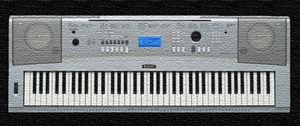
Yamaha DGX 220 Your Ad Here

Yamaha DGX "portable grand" is the most playful yamaha keyboard for different melodies and world styles. Enjoy using it.

full Yamaha styles


A admired arranger series from Yamaha, the Yamaha DGX grand piano keyboard series has keyboard instruments with more than 61 keys. The advanced models in this series come with 88 fully weighted piano action keys that feel more like a piano. These keyboards bring you the best of an arranger and a digital piano.

Though the Clavinova and the Arius pianos look and feel more like proper pianos, most music enthusiasts will find them quite expensive.

Whereas a Yamaha DGX keyboard is far more affordable as far as price is concerned. Yamaha DGX 230 and Yamaha DGX 640 are two keyboards in this series, one at the lower end and the other at the top of this series.

A typical Yamaha DGX grand piano keyboard is designed to be more portable, but some can still give you a decent workout. Weighted keys and bundled stand can be some of the reasons for making the keyboard a bit heavy.

Keyboard functions like several sounds, styles, and effects can be found on these DGX keyboards. You will also find features like USB to Device terminal, USB to Host terminal, pitch bend on some of these models.

Overall, the DGX keyboards give you the best of a digital piano and an arranger at a price that you cannot resist. These are any day more inspiring to practice upon than any other 61 key arrangers. So if all this sounds interesting, check out the 88 key Yamaha DGX grand piano keyboard today.


2-4
6-8
Ballad
Ballroom
Bigband
Classic
Country
Disco
Easy listening
Instruments
Jazz
Latin
Learning
Polka
Pop
R&B
Rock
Unsorted
World
Xmas


In this site you can download free yamaha styles from everywhere in the world. Unique collections of voices, midi, style files and registry information in the whole world.

Data Structures With C Seymour Lipschutz May 2026

typedef struct Node { int data; struct Node* left; struct Node* right; } Node; Node* root = NULL; Graphs can be represented using adjacency matrices or adjacency lists:

#define MAX_SIZE 10 int stack[MAX_SIZE]; int top = -1; void push(int value) { if (top < MAX_SIZE - 1) { stack[++top] = value; } } int pop() { if (top >= 0) { return stack[top--]; } return -1; } Trees can be implemented using structures and pointers: data structures with c seymour lipschutz

#define NUM_VERTICES 5 int graph[NUM_VERTICES][NUM_VERTICES] = { {0, 1, 1, 0, 0}, {1, 0, 1, 1, 0}, {1, 1, 0, 0, 1}, {0, 1, 0, 0, 1}, {0, 0, 1, 1, 0} }; typedef struct Node { int data; struct Node*

C provides a versatile environment for implementing data structures, with its low-level memory management and flexible data typing. Lipschutz emphasizes the importance of understanding the underlying memory management mechanisms, such as pointers, to effectively implement data structures in C. In C, arrays are declared using the following syntax: $ \(int arr[5] = {1, 2, 3, 4, 5}\) $. Linked Lists A simple linked list implementation in C involves defining a node structure and a pointer to the head of the list: Linked Lists A simple linked list implementation in

Data structures refer to the way data is organized and stored in a computer, allowing for efficient access, modification, and retrieval. In C, data structures are used to implement various algorithms, which are the building blocks of computer programs. A well-designed data structure can significantly improve the performance, scalability, and reliability of a program.

Mastering data structures with C is an essential skill for any programmer or software developer. Seymour Lipschutz’s comprehensive guide provides a thorough understanding of data structures, from basic arrays and linked lists to more complex trees and graphs. By grasping these concepts and techniques, developers can write more efficient, scalable, and reliable code.